
The co evolution of reproductive organs in Muscovy ducks, a product of sexual conflict
Publish time:2025-02-18 Author:华南生物 Column:Tech Features
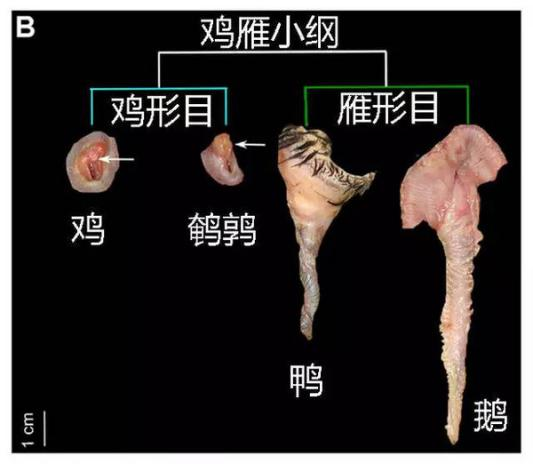
97% of birds do not have external genitalia, while ducks and geese in waterfowl have evolved external genitalia.
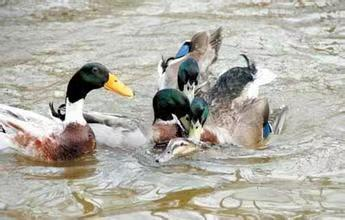
Ducks often engage in violent behaviors during mating, such as alternating mating, forced mating, pecking, etc. Even cases of corpse rape have occurred.

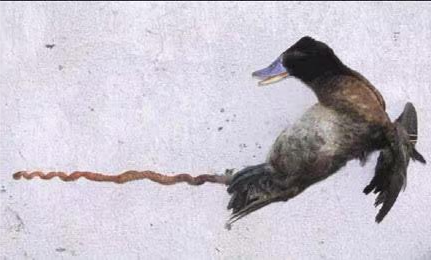
Taking Muscovy Duck as an example, the length of its external genitalia is generally 19.23 ± 0.70 centimeters.
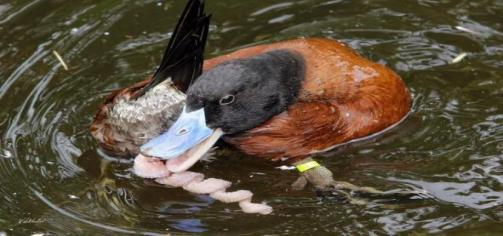
Muscovy duck penis eversion (erection) is extremely fast, which can be completed in 0.346 ± 0.07 seconds. The average speed is 1.3 m/s.
Ejaculation begins when the degree of penile eversion is maximum, with an ejaculation speed of 0.75-1.56 meters per second. The seminal sulcus forms afunctionally closed channel in which semen flows at high speed
After ejaculation, the penis immediately (less than 1 second) returns to its original state, and then slowly retracts into the cloaca. The average time for the penis to return to the ejaculation chamber is 124 ± 53.27 seconds, which is more than 190 times slower than penile eversion.
Sexual confrontation is a common result of differences in reproductive interests between genders, which can lead to adversarial changes in the morphology of animal reproductive organs. The female duck evolved a reproductive tract opposite to the spatial conformation of the male duck penis for this purpose. The external genitalia of male ducks are spiral shaped, with the spiral rotating counterclockwise; The reproductive tract of a mother duck is also spiral shaped, but the spiral rotates clockwise. In waterfowl, the length and development of male genitalia are related to the frequency of forced mating.

Biologist Brennan conducted an experiment by creating glass tubes of different shapes to simulate the reproductive tract of female ducks. They are: straight line type, counterclockwise spiral, clockwise spiral, and 135 ° corner type.
The results showed that the straight tube and counterclockwise spiral did not affect the eversion and ejaculation of the male reproductive organs, with success rates of 71.42% and 88.88%, respectively. The counterclockwise spiral and 135 ° angled tube successfully prevented the external genitalia of male ducks from turning outward, with success rates of only 14.28% and 25%, respectively.
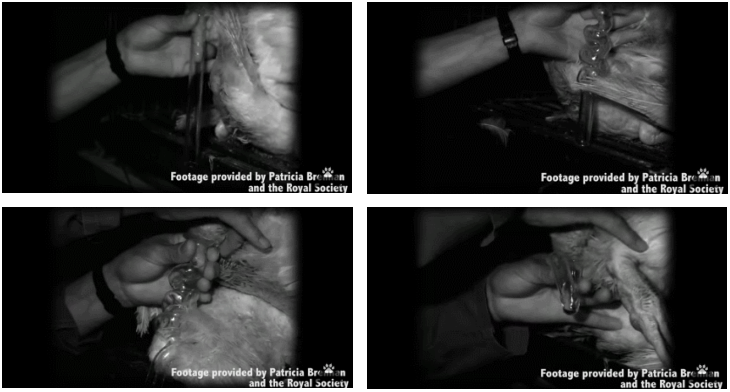
Why did such evolutionary results occur? Brennan hypothesizes that forced mating brings high survival costs to female animals, such as being abandoned, injured, and dying by their spouses. The evolved reproductive tract morphology of female Muscovy ducks physically prevents forced invasion by male ducks and reduces the likelihood of fertilization. Through the widespread sexual conflict between female mate selection and male forced mating, the reproductive systems of animals of different genders exhibit a coevolutionary effect anatomically, as evidenced by the Muscovy duck.